
Best overall: short-term skilled nursing rehabilitation when you need nursing support alongside recovery. Best for intensive, hospital-level rehabilitation: inpatient rehabilitation. Best for recovery while living at home: outpatient rehabilitation. The right choice among Wisconsin short-term rehab facilities in 2026 starts with your care needs, not a statewide popularity list. Avina Healthcare offers short-term rehabilitation among its Wisconsin senior care services; confirm the services offered at the specific community you are considering.
TL;DR
- Choose short-term rehab facilities by nursing needs, therapy setting and discharge support, not amenities alone.
- Avina Healthcare offers short-term rehabilitation; confirm the specific community’s services before arranging a visit.
- Inpatient rehabilitation suits people whose clinical assessment supports intensive, hospital-level rehabilitation.
- Outpatient rehabilitation suits people who can live safely at home and attend therapy appointments.
Why this matters
A hospital discharge can leave your family making an unfamiliar decision under pressure. You need to understand what care is required, who will provide it and what must happen before returning home.
Short-term rehabilitation describes a purpose, not one interchangeable type of facility. A skilled nursing facility, an inpatient rehabilitation hospital and an outpatient therapy clinic serve different needs. A convenient location does not make an unsuitable setting the right choice.
The best short-term rehab facility is the one that can meet your assessed needs and prepare you for a safe next step. Ask your hospital discharge team or treating clinician to identify the appropriate level of care before you compare buildings, activities or room features.
What makes the best short-term rehab facilities?
Use these criteria to build your Wisconsin shortlist in 2026. A facility should explain how each applies to your situation rather than give a general description of its services.
- Clinical fit: Can the team manage your current medical needs, medication plan and required assistance? Describe those needs before scheduling a tour.
- Therapy fit: Does the setting provide the rehabilitation disciplines your clinician recommends? Ask how an individual treatment plan is established and reviewed.
- Nursing support: What nursing care do you need between therapy sessions, including overnight? Clarify the difference between scheduled therapy and ongoing care.
- Discharge preparation: How will the team evaluate the tasks you need to manage at home, involve caregivers and coordinate follow-up?
- Family access: Can the people supporting you participate in planning and visit consistently? Consider the actual trip, not just the distance on a map.
- Quality information: Review applicable Medicare Care Compare information and Wisconsin Department of Health Services records. Use those records alongside direct questions about your needs.
Wisconsin rehabilitation options at a glance
The comparison below ranks care settings by their best-fit use case. Individual admission decisions require a clinical assessment; the table is not a substitute for one.
1. Short-term skilled nursing rehabilitation
- Best for: Recovery that also requires nursing care
- Standout feature: Nursing support and rehabilitation within a residential care setting
- Key limitation: Facility capabilities must match your specific needs
2. Inpatient rehabilitation
- Best for: Clinically appropriate intensive rehabilitation
- Standout feature: Hospital-level rehabilitation with coordinated medical oversight
- Key limitation: Admission depends on clinical criteria and ability to participate
3. Outpatient rehabilitation
- Best for: Recovery while living safely at home
- Standout feature: Therapy appointments without a residential stay
- Key limitation: Does not provide residential nursing or help between appointments
1. Short-term skilled nursing rehabilitation: best for nursing support
Short-term rehabilitation in a skilled nursing facility combines rehabilitation with nursing care during a residential stay. It is a setting to discuss when returning directly home would leave medical or daily-care needs unmet.
Your needs determine whether a particular facility fits. Explain your medication needs, mobility limitations, required assistance and any care instructions from the hospital before treating a location as a serious option.
Short-term skilled nursing rehabilitation pros:
- Provides a residential setting when recovery at home is not yet appropriate.
- Combines rehabilitation planning with nursing care.
- Allows discharge preparation to include daily activities and caregiver involvement.
Short-term skilled nursing rehabilitation cons:
- A facility’s general rehabilitation offering does not establish that it can manage every medical need.
- A residential stay means time away from your usual home routine.
- Therapy arrangements and discharge support require facility-specific questions.
Best for: Someone who needs nursing support during recovery and has been assessed as appropriate for skilled nursing rehabilitation.
Avina Healthcare short-term rehabilitation belongs on your shortlist when a specific community’s services match the discharge plan. Its family-owned Wisconsin network offers several types of senior care, but that does not establish that every community provides every service.
Verdict: Skip any facility that cannot explain how it will meet the needs documented in your discharge plan.
2. Inpatient rehabilitation: best for intensive rehabilitation
Inpatient rehabilitation provides hospital-level rehabilitation for people who meet its clinical admission requirements. Your treating team evaluates whether the intensity of care and therapy is appropriate for your condition and ability to participate.
Do not interpret intensive rehabilitation as automatically better rehabilitation. The right setting is the one that fits your medical needs and what you can safely do.
Inpatient rehabilitation pros:
- Combines rehabilitation with hospital-level medical care.
- Brings multiple rehabilitation disciplines into a coordinated treatment plan.
- Supports people whose assessed needs call for this level of rehabilitation.
Inpatient rehabilitation cons:
- Clinical admission requirements limit who is appropriate for the setting.
- The demands of treatment must match your ability to participate.
- It is not interchangeable with a skilled nursing rehabilitation stay.
Best for: Someone whose clinical team recommends intensive, hospital-level rehabilitation and confirms that the admission requirements are met.
Ask the hospital team why this setting fits better than skilled nursing rehabilitation. The answer should connect to your condition, medical oversight and rehabilitation needs, not simply describe one setting as more advanced.
Verdict: Skip inpatient rehabilitation as a default choice; pursue it when your clinical assessment supports that level of care.
3. Outpatient rehabilitation: best for recovery at home
Outpatient rehabilitation provides therapy through scheduled appointments while you live at home. It fits people whose clinical team determines that residential rehabilitation is unnecessary and whose home arrangements support safe recovery.
Consider everything that happens outside the appointment. You still need a workable plan for transportation, medications, meals, personal care and any exercises prescribed by your therapy team.
Outpatient rehabilitation pros:
- Lets you remain at home during treatment.
- Provides appointments focused on your prescribed rehabilitation needs.
- Allows you to practice daily routines in your own environment between visits.
Outpatient rehabilitation cons:
- Does not provide residential care or overnight nursing.
- Requires transportation and a reliable way to attend appointments.
- Leaves household and personal-care needs to your home support arrangements.
Best for: Someone who can live safely at home and attend the therapy appointments recommended by their clinician.
Do not choose outpatient rehabilitation solely because a residential stay feels disruptive. First confirm that home is appropriate and that the people expected to help understand what the role involves.
Verdict: Skip outpatient-only care when your assessed needs require nursing or assistance that your home arrangements cannot provide.
How these options are ranked
The order starts with the needs families commonly mean when searching for a residential rehabilitation facility: nursing support during recovery. Inpatient and outpatient rehabilitation then occupy separate clinical use cases, rather than competing for the same patient.
This 2026 guide prioritizes clinical fit, nursing support, therapy fit and discharge preparation. No care setting wins for everyone, and a setting-level recommendation is not a quality rating for an individual facility.
From shortlist to admission: confirm the care plan
Use 3 checkpoints before agreeing to a placement: care needs, clinical review and discharge planning. Keep the discussion specific to the person receiving care.
Care needs
Ask your treating team for a clear explanation of the recommended level of care. Include mobility, personal assistance, medications and any ongoing treatment instructions.
Describe what home actually looks like. Stairs, bathroom access and the help someone can realistically provide matter more than a general statement that family will be there.
Clinical review
Ask the receiving facility to review the relevant clinical information through its appropriate admission process. A pleasant tour does not establish that the care team can meet your needs.
Confirm who will explain the admission decision and answer remaining questions. Share medical information through the provider’s designated process rather than a general website inquiry field.
Discharge plan
Ask how the team will prepare you for the next setting. Discuss daily tasks, caregiver instruction, equipment recommendations and follow-up arrangements as they apply to your care plan.
Returning home should be a planning topic from the beginning, not a conversation saved for the final day.
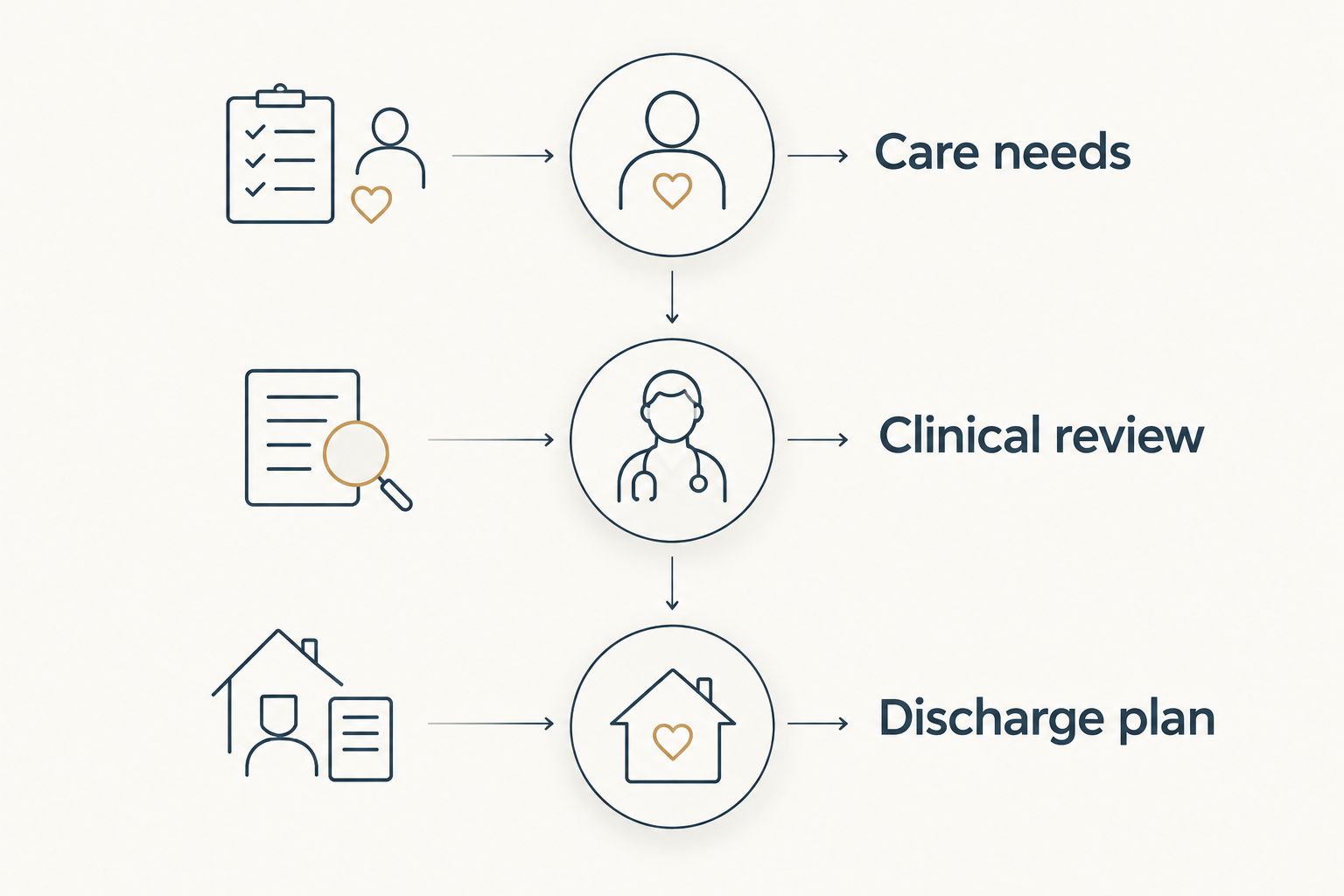
Confirm the care fit before making the placement decision.
Questions to ask during a Wisconsin rehab tour
Bring the care plan to the conversation, but keep sensitive details within the facility’s appropriate clinical discussion. Ask for concrete explanations rather than assurances that everything will be handled.
- Who coordinates care? Ask which role oversees the rehabilitation plan and who communicates changes to you or your designated family contact.
- What happens outside therapy? Discuss help with getting to the bathroom, dressing, meals and movement as relevant to your needs.
- How are concerns handled? Find out whom to contact about a care question during the day and overnight.
- How does family participate? Ask about care discussions and training for anyone expected to help after discharge.
- What will returning home require? Ask how the team assesses readiness and explains any remaining support needs.
For a 2026 placement, confirm the answers for the specific facility and proposed admission. General descriptions of a provider’s network do not replace a discussion with the receiving team.
If 2 facilities appear equally suitable, compare the clarity of their answers. Ask both the same questions so you can distinguish a documented plan from a reassuring but general conversation.
Confirm coverage separately from care suitability
A facility can be clinically appropriate without your coverage working as expected. Treat care acceptance and insurance verification as 2 separate conversations.
Ask the facility and your insurer what applies to the proposed stay, including network requirements, authorization and your financial responsibility. For Medicare questions, use Medicare.gov and your plan’s official materials rather than assuming that every rehabilitation stay follows the same rules.
Do not base the decision on a general statement that a provider accepts an insurer. Confirm what applies to your plan, the specific facility and the recommended services.
Keep notes about who answered, when the discussion happened and what still requires a decision. Coverage information for a different stay or another family member is not a substitute for your own verification.
Which short-term rehab facility should you choose?
Start with short-term skilled nursing rehabilitation when your discharge team recommends residential recovery with nursing support. Choose inpatient rehabilitation when the clinical assessment calls for hospital-level rehabilitation, and outpatient rehabilitation when recovery at home is appropriate.
For families considering Avina Healthcare, the next step is a community-specific discussion about the care plan. Ask which location offers the recommended service and how that team evaluates the person’s needs.
Keep your Wisconsin shortlist focused in 2026. Compare suitable facilities near the people who will help, then examine care planning, applicable quality records and coverage details before deciding.
A beautiful building cannot compensate for the wrong level of care. A clear, individualized plan deserves more weight than a broad promise about recovery.
FAQ
What are the best short-term rehab facilities in Wisconsin?
The best short-term rehab facilities are those that can meet your assessed medical, nursing and rehabilitation needs. Start with your treating team’s recommended level of care, then compare individual facilities using care discussions, applicable quality records and coverage verification.
Is short-term rehab the same as a nursing home?
Short-term rehabilitation can take place in a skilled nursing facility, but rehabilitation and long-term residence serve different purposes. Ask whether the specific facility provides the rehabilitation and nursing care recommended for you.
Is inpatient rehabilitation better than skilled nursing rehabilitation?
Inpatient rehabilitation is not automatically better than skilled nursing rehabilitation. The appropriate choice depends on your clinical needs, the required level of medical oversight and your ability to participate in the recommended treatment.
Can I recover at home with outpatient therapy instead?
Outpatient therapy is an option when your clinical team determines that home recovery is appropriate. You also need workable arrangements for transportation, daily activities and any assistance required between appointments.
Does Avina Healthcare offer short-term rehabilitation?
Avina Healthcare offers short-term rehabilitation among its Wisconsin care services. Confirm that the specific community you are considering offers the recommended service and can meet your individual needs.
Will insurance cover a short-term rehab stay?
Coverage depends on your plan, the proposed services and applicable requirements. Verify the specific facility, authorization requirements and financial responsibility directly with your insurer and the facility.
What should I ask before choosing a rehab facility?
Ask how the facility will meet your care needs, communicate with you and prepare for discharge. Then confirm coverage separately and clarify who will answer questions during the stay.
One last thing
Ask this before making your final decision: What will I need to do safely at home, and how will the team help me prepare?
The answer turns an abstract discussion about rehabilitation into practical goals. Getting into the bathroom, managing medications or moving through the home matters more than a general promise to help you get stronger.
Bring the person receiving care into that conversation whenever possible. A useful plan reflects both the clinical recommendations and the life they want to return to.
